
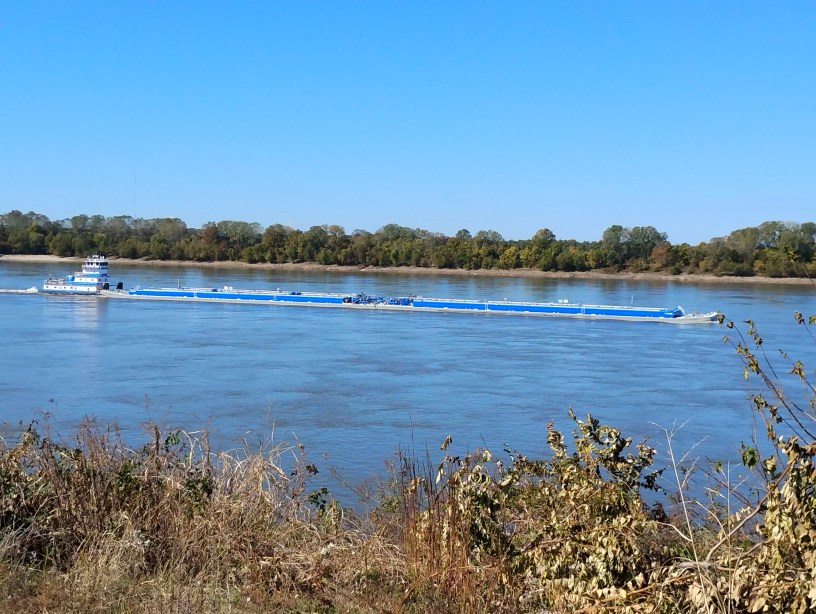
One of the best things about sitting on the bank of the Mississippi is that sooner or later, something big comes around the bend. On a crisp, cloudless November day, it was a towboat with a long, bright blue tow of tank barges, gliding past the far shore.
Despite the name, a towboat doesn’t tow anything. It pushes. The boat at the back is lashed to the barges ahead of it, and the whole rig moves as one long, rigid unit. That’s why the tow in the photo looks like a single flat blue ribbon stretched across the water, with the little white pilothouse perched at the stern end.
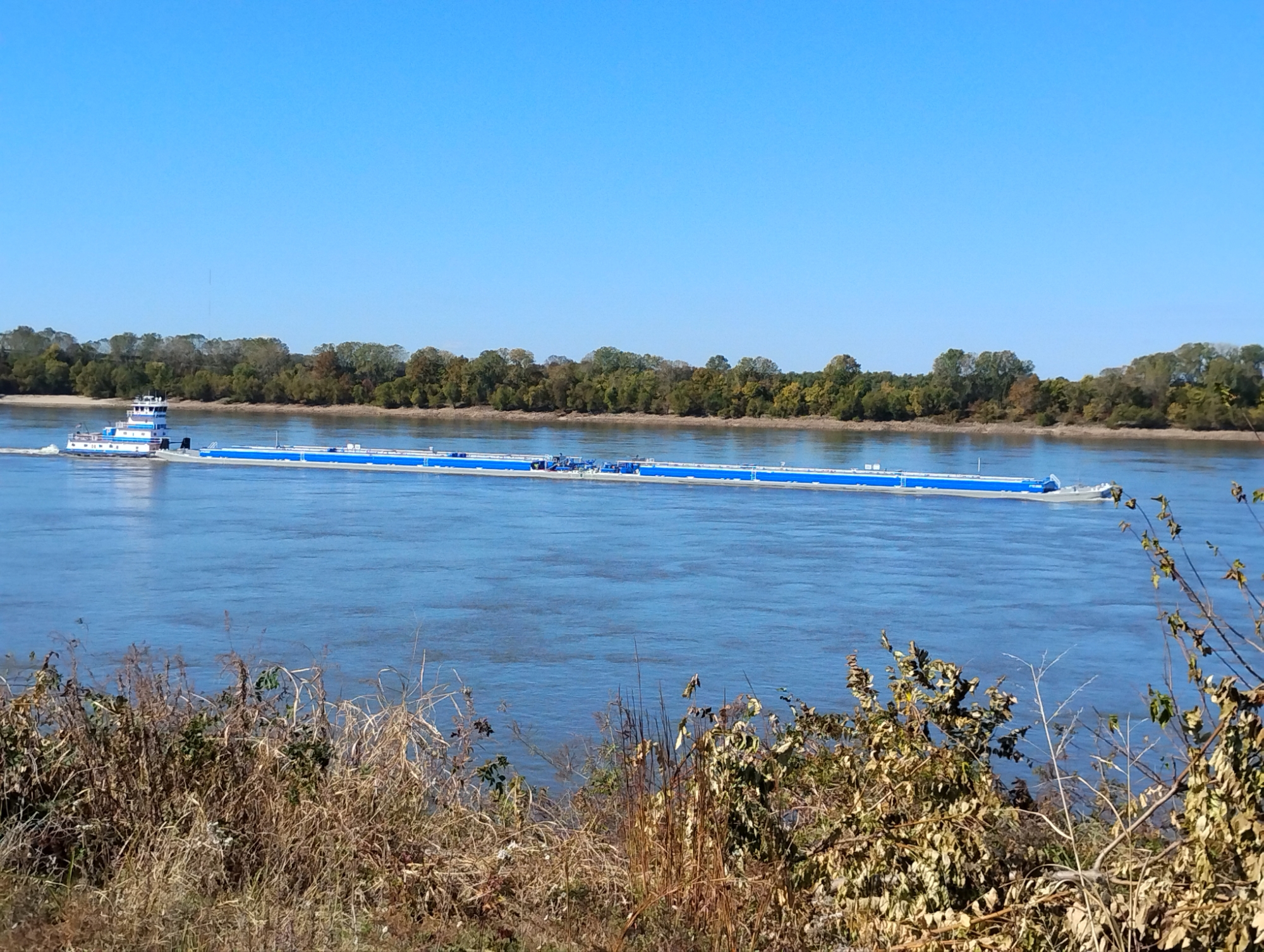
The blue decks suggest tank barges, which typically haul liquid cargo like petroleum products, chemicals, or fertilizer. A single barge like these can carry what would take well over a hundred tractor-trailers, which is a big reason the river is still such an important freight highway.
What I love about watching a tow go by is how unhurried it looks. There’s a little white wake churning at the stern, but the barges themselves barely seem to disturb the water. The current does a lot of the work. Behind them, the far bank was a mix of sandbar and trees just starting to turn, with greens, golds, and rusty browns along the tree line.
Tips for watching river traffic:
- Pick a spot with a clear view of the channel, such as a bluff, levee, or riverside park.
- Bring binoculars. You can often read the boat’s name and see the crew moving around on deck.
- Be patient. Traffic comes in waves, and you may wait a while and then see several tows in a row.
- Keep a safe distance from the water’s edge. Banks can be steep or soft, and wakes and currents are stronger than they look.
Fall is a great time for it too. The air is clear, the light is low and golden, and the bugs are gone. If you’ve got a river nearby, go sit by it for an hour and see what floats past.

